Library Exhibits

» Politics of Poetry | » Demon of Melancholy | » Machado de Assis

Currently on Exhibit:


The Politics of Poetry: Walt Whitman and the Public Memory of Abraham Lincoln

John D. Rockefeller Library
April 1 - June 15, 2008

Walt Whitman and Abraham Lincoln never met in life, but Whitman has played an instrumental role in the way Americans think about Lincoln and his work as President since the assassination in April 1865. This exhibition, drawn from the McLellan Lincoln Collection and the Harris Collection of American Poetry and Plays at the John Hay Library, explores Whitman's various memorials to Lincoln and their influence on generations of Americans, both those contemporaries who knew and remembered Lincoln, and those since who have had to imagine and re-imagine him for themselves.

For further information contact Holly_Snyder@brown.edu.


Currently on Exhibit:


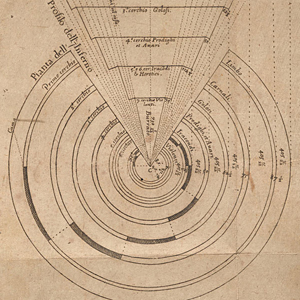
The Demon of Melancholy: Genealogies, Modernities.

Curated by Pauline de Tholozany and Dominique Coulombe

April 14 - May 16, 2008
Lownes Room, John Hay Library
20 Prospect Street
Providence, Rhode Island 02912

Sponsored by the Department of French Studies.

From antiquity to modern times, from the confinement of enclosed spaces to open-ended journeys of displacement, as part of an individual or collective experience, Melancholy has been a source of inspiration and contemplation for philosophers, aesthetes, writers, artists, and scientists.  At the crossroads of the fields of philosophy, occultism, literary arts, visual arts, and medicine, the theme of Melancholy lays a fertile ground for an abundance of literary and artistic creations.  How has Melancholy been perceived and represented across the centuries? The displays of this exhibition attempt to provide a partial answer to this question. While it would be an impossible task to give justice to such a rich and vast theme in a small exhibit, works selected from the collections of the John Hay Library and Rockefeller Library offer some insight into the complexities and paradoxes of the theme of Melancholy and illustrate its dialectic nature: on one hand a debilitating and paralyzing force that can lead to asthenia, inhibition, or even mental illness;  on the other hand, a nurturing, creative and restorative power capable of unleashing artistic creation, healing the wounds and renewing the will to survive. 

The John Hay exhibit is designed to accompany the Conference "The Demon of Melancholy: Geneaologies, Modernities" which will take place at Brown University on April 24th and 25th, 2008.

Image source: Zénon méditant sous le portique d'Athènes. In: Physiologie des passions, ou Nouvelle doctrine des sentimens moraux / par J.-L. Alibert... Paris : Béchet, 1826.


Currently on Exhibit:


Machado de Assis: Reading the Brazilian Master, Then and Now

Curated by Ana Catarina Teixeira and Patricia Figueroa in collaboration with Prof. Nelson Vieira

April 15 - June 5, 2008
John Hay Library

20 Prospect Street, Providence, Rhode Island 02912

Sponsored by the Department of Portuguese & Brazilian Studies and the Center for Latin American Studies.

To both Brazilian and international critics, Machado de Assis is a name that stands alone in 19th century Latin American fiction. Born on the 21st of June 1839 in Rio de Janeiro to a father of African ancestry and a Portuguese mother, Machado de Assis, as an autodidact, rose above humble beginnings and a meager education to achieve the highest status of his country's literary establishment.

During his prolific career, Machado explored nearly every genre--poetry, theater, journalism, literary criticism, and translation--but it was as a novelist and a short story writer that Machado forged a narrative voice that would forever impact the literary topography of his nation. At a time when European models dominated, Machado rejected pure imitation and explored new ways to represent Brazilian society.

In 1908, at the age of 69, Machado de Assis died in his native city, leaving behind a legacy of short stories and novels, which mordantly criticized Brazil's insensitive upper middle class and elites with the use of subtle irony and well-crafted ambiguity.

The masterful manner in which Machado created his memorable characters not only allows his readers, then and now, to better comprehend the realities of Brazilian society, but above all, the complexities of the human condition. This unprecedented contribution not only placed Brazilian literature on the literary map, but also paved the way for the "new novel" in 20th century Portuguese and Spanish America.

This year, Brown Univertsity Library joins the literary community to commemorate the 100th anniversary of Machado's death with a display of early criticism of Machado's works, donated by Professor William Leonard Grossman. The materials selected highlight not only the vast array of responses by his contemporaries, but also reveal insights into the timeless and universal nature of his prose in an attempt to help the audience gain a glimpse of Machado, the man and the writer, as a source of inspiration for an exponentially growing corpus of literary criticism.

The Department of Portuguese and Brazilian Studies is proud to co-sponsor this exhibit on Machado de Assis since his writing is an integral part of the undergraduate and graduate curriculum.

Image source: cover from "Machado de Assis" by Augusto Corrêa Pinto. Rio de Janeiro: Irmãos Pongetti, 1958. John Hay Library.


Library Exhibits on the Web:
sorted by date |
resort by title